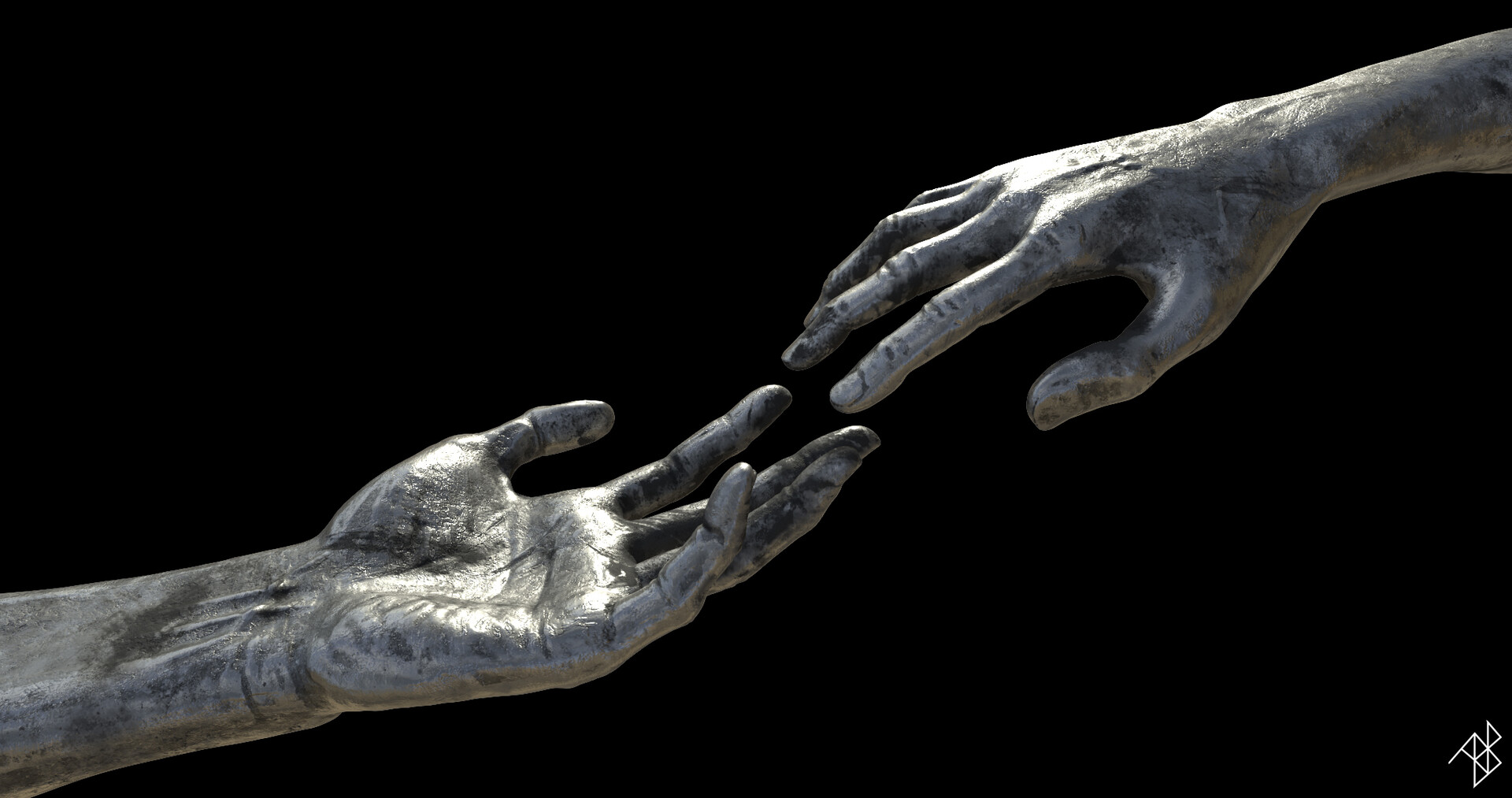


Hands, remarkable in their functionality, serve as our primary means of connection and interaction with the physical world. Through our hands, we engage with the engineered environment we have crafted around us, from doors and buttons to portable objects. We possess voluntary control over our hands, capable of assuming any desired pose, while also experiencing an innate automatic response to their surroundings. Notice how effortlessly we adjust ourselves to accommodate the act of picking up an object, employing a precision grip at the fingertips or a full hand grasp for heavier items. Some objects are ergonomically designed, facilitating a seamless and comfortable grip.
Hands are truly astonishing, so much so that the ancient Greeks revered them as "the instrument of instruments," as eloquently stated by Andrew Loomis. Their significance extends beyond their functional role, encompassing non-verbal communication and gestures ingrained in our cultural fabric. For instance, sign language represents an extreme form of communication through hand gestures, while certain hand gestures, such as the peace sign or offensive gestures, convey explicit messages. Historical contexts, such as the mutilation of bow fingers during the 100-year war or the ancient Greeks' symbolic representation of the middle finger resembling a penis, further highlight the cultural and expressive aspects associated with hand gestures.
Sculpting hands entails a thorough understanding of their underlying structure. The osteology begins with the two forearm bones, the radius and ulna, connected to eight carpal bones, which in turn connect to five metacarpals and the phalanges. Notably, the thumb differs with only two phalanges compared to the three in the fingers. Among the eight carpal bones, particular attention is given to the scaphoid and pisiform bones, as they serve as vital landmarks and are commonly susceptible to fractures resulting from falls.
This collection of hand sculptures serves as a means to deepen my comprehension of the intricate anatomy of the hand and to develop a sculpting methodology that can be effectively imparted to my students. As Christian Bull aptly describes, it involves finding order within the chaos of our creative work. By delving into the complexity of hand anatomy and refining sculpting techniques, I aim to provide a valuable resource for fellow artists and aspiring learners in their pursuit of mastering the art of sculpting hands.